Sewage Sludge to Power: Biogas CHP at a 120 MLD STP in Lucknow

How We Turned Sewage Sludge into Power at a 120 MLD STP in Lucknow
Every city produces sewage, and every sewage plant ends up with sludge. Most people see it as a disposal problem. We see it as an energy source that is often wasted.
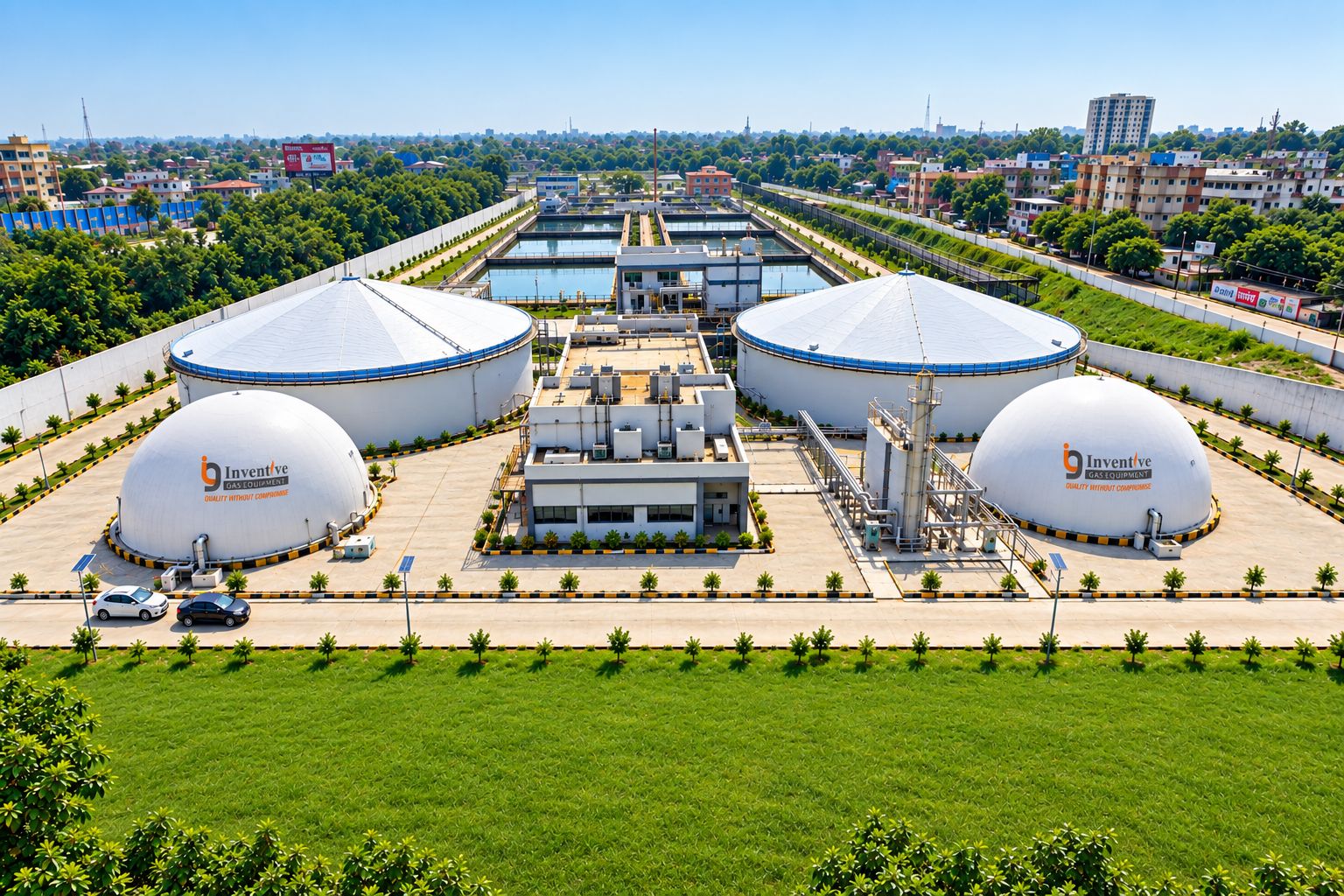
At a 120 MLD Sewage Treatment Plant (STP) in Lucknow, we had the chance to prove it. Working with Shapoorji Pallonji & Company Pvt. Ltd. on a project associated with Uttar Pradesh Jal Nigam, our team at Inventive Gas Equipment delivered the complete biogas handling and power generation system, from gas storage to electricity.
This post explains how the system works, what we supplied, and what we learned along the way.
Quick Answer: What Did Inventive Deliver?
Inventive supplied, installed and commissioned an end-to-end biogas system for a 120 MLD STP. It includes in-house manufactured double-membrane gas holders, a biochemical scrubber for H₂S removal, a flare, a dehumidification unit, two 1.2 MW European biogas gensets for combined heat and power (CHP), and more than 40 supporting equipment items.
The Project at a Glance
- Location — Lucknow, Uttar Pradesh
- Plant type — 120 MLD Sewage Treatment Plant
- Client — Shapoorji Pallonji & Company Pvt. Ltd.
- Associated authority — Uttar Pradesh Jal Nigam
- Our scope — Supply, installation, commissioning and integration of the biogas storage, treatment and CHP systems
Why Biogas from Sewage Sludge Makes Sense
An STP treats wastewater through several stages of screening and treatment. Solids and sludge are separated, and the treated water is processed for discharge and reuse, including gardening inside the plant premises.
The sludge then goes into anaerobic digesters. These tanks hold controlled conditions of temperature and sludge quality so that microorganisms can break down organic matter without oxygen. The result is biogas, a fuel rich in methane.
Capturing that gas turns a centre into a resource. Instead of letting energy escape, the plant can generate its own heat and power, reduce dependence on the grid, and cut the environmental burden of sludge handling.
How the System Works, Step by Step
Biogas is not ready to use the moment it leaves the digester. It has to be stored, cleaned, dried and then used safely. Here is the journey at this plant.
- 1. Raw biogas storage — Gas from the digesters collects in a double-membrane holder of about 1,600 m³. It acts as a buffer, so the engines receive a steady supply even when digester output fluctuates.
- 2. H₂S removal — A biochemical scrubber rated at roughly 700 m³/hr removes hydrogen sulphide, which is corrosive and harmful to engines and piping.
- 3. Moisture control — A dehumidification system and moisture traps remove water vapour that would otherwise damage downstream equipment.
- 4. Clean biogas storage — Treated gas is held in a second double-membrane holder, also about 1,600 m³, ready for use.
- 5. Power and heat generation — Two European biogas gensets, each around 1.2 MW, convert the gas into electricity. Heat recovery and sludge heat exchanger systems send the engine heat back into the process, helping keep the digesters warm.
- 6. Safety backup — A flare rated at about 750 m³/hr burns excess gas in a controlled way when needed, so nothing is vented to the atmosphere.
What We Delivered
Major equipment
- Two double-membrane biogas holders (raw and clean), manufactured in-house
- Biochemical scrubber for H₂S treatment
- Biogas flare system
- Dehumidification system
- Two 1.2 MW European biogas gensets with ventilation, radiator cooling, heat recovery and sludge heat exchanger systems
- 30-metre chimney
- Electrical and control panels
Supporting equipment
- Moisture traps and flame arrestors
- Biogas blowers and pumps
- Valves and associated piping
- Instrumentation and control components
In total, the package covers more than 40 equipment items. Having one team responsible for all of them avoids the interface problems that appear when gas storage, treatment and power generation are bought from different suppliers.
Why In-House Manufacturing Matters
The gas holders at this site were built by us, in our own facility in Greater Noida. That gives us direct control over material selection, fabrication quality, testing and delivery schedules. It also means we know exactly how the holder was built if a question ever comes up years later.
For a plant that must run around the clock, that accountability is a real advantage. Combined with technology partnerships in Europe, it lets us pair locally built equipment with proven international engineering.
Our Role Went Beyond Supply
Equipment arriving on site is only the middle of the story. Our team stayed involved through installation, testing, commissioning, system integration and troubleshooting, and continued until the plant ran as intended.
On a project this size, that meant working daily with the client, consultants, and the civil and electrical teams. A biogas system touches almost every discipline on site, and small mismatches in gas pipe levels, panel interfaces or control logic can delay everything. Good coordination is as important as good equipment.
What Experience Has Taught Us
A few practical lessons from projects like this:
- Design for the whole chain. — Storage, scrubbing, drying and power generation should be sized together, not in isolation.
- Do not underestimate H₂S. — Reliable scrubbing protects engines, heat exchangers and piping for years.
- Plan safety from day one. — Flame arrestors, flares and control logic are not add-ons.
- Plan for heat recovery. — Reusing engine heat for digester heating improves overall plant efficiency.
Frequently Asked Questions
What is a double-membrane gas holder?
It is a flexible gas storage unit with an outer membrane that holds its shape and an inner membrane that rises and falls with the gas volume. It stores biogas at low pressure and balances supply and demand.
Why is H₂S removed from biogas?
Hydrogen sulphide is toxic and corrosive. Left in the gas, it damages engines, pipes and instruments and shortens equipment life.
What does a biogas CHP system do?
Combined heat and power generation uses biogas to produce electricity and captures the engine's waste heat for useful purposes, such as warming digesters.
What is the purpose of a biogas flare?
It safely burns surplus biogas that cannot be stored or used, preventing methane from escaping into the air.
Can sewage treatment plants generate their own power?
Yes. Where sludge is digested anaerobically, the biogas can fuel gensets that supply a significant share of the plant's electricity needs.
Final Thoughts
The Lucknow project shows what a well-integrated biogas system can do for a large STP: manage sludge responsibly, generate usable energy and reduce environmental impact.
If you are planning a biogas, CBG or STP-based energy recovery project, Inventive Gas Equipment can support you from design and manufacturing through commissioning. Contact our team to discuss your requirements.
Biogas Equipment
Explore our comprehensive range of high-performance biogas solutions, engineered for safe storage, efficient upgrading, and maximum operational reliability.
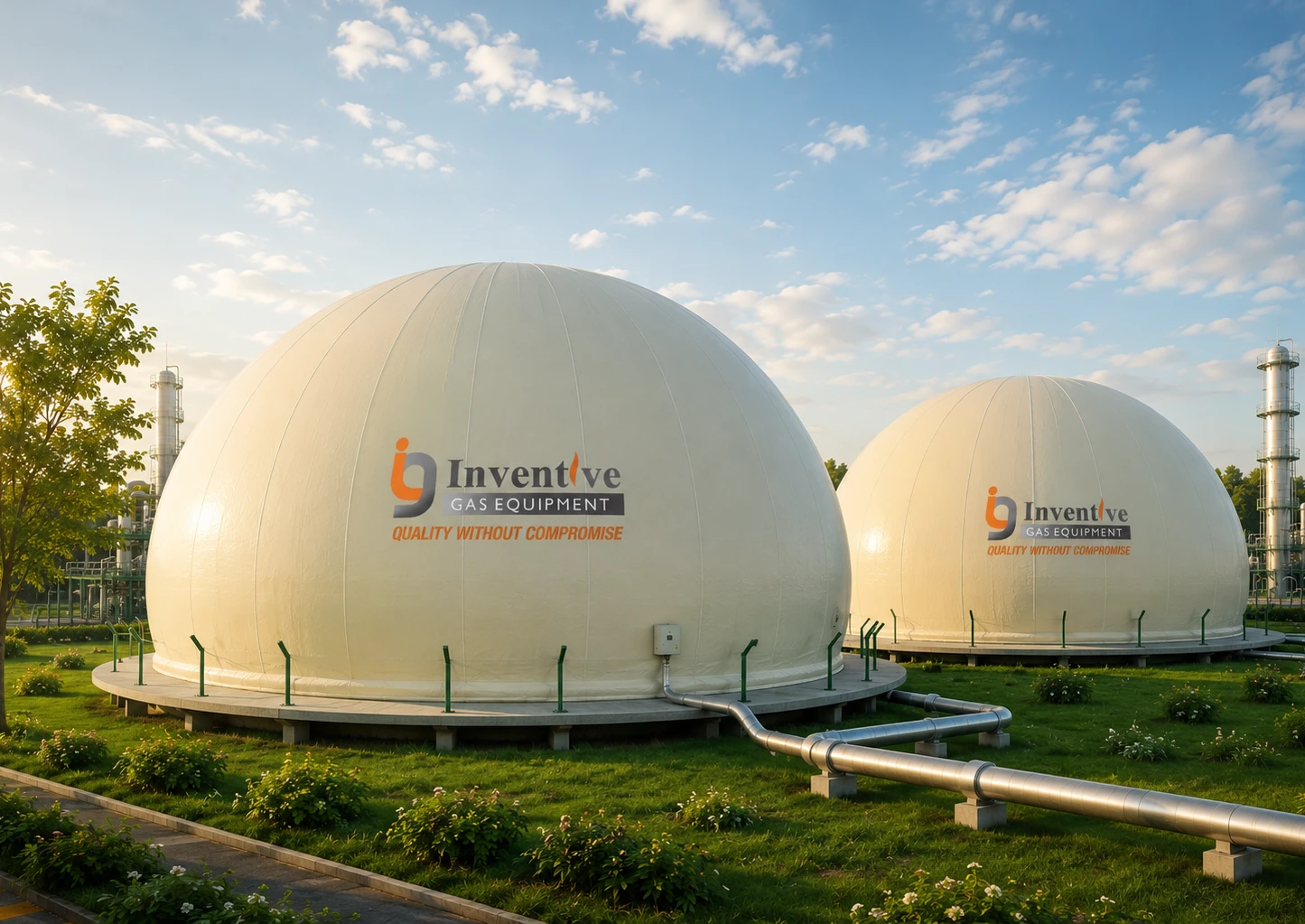
Double Membrane Gas Holder
High-performance double membrane gas holders engineered for safe, reliable and efficient biogas storage in industrial renewable energy systems
CO2 Removal System
Advanced VPSA and Membrane-based CO2 removal skids to upgrade biogas into high-purity biomethane for CBG applications.
Flaring System
Supply and commissioning of open/closed flares for safe excess gas handling with compliant flame safety controls.
H₂S Scrubber
Advanced H₂S scrubbing solutions with custom media selection, vessel sizing, and moisture removal for ultimate equipment protection.
Dehumidifier
Biogas dehumidification units to reduce moisture, protect downstream equipment, and improve system efficiency.
Core Solutions
End-to-end gas energy products engineered for reliability and fuel efficiency.
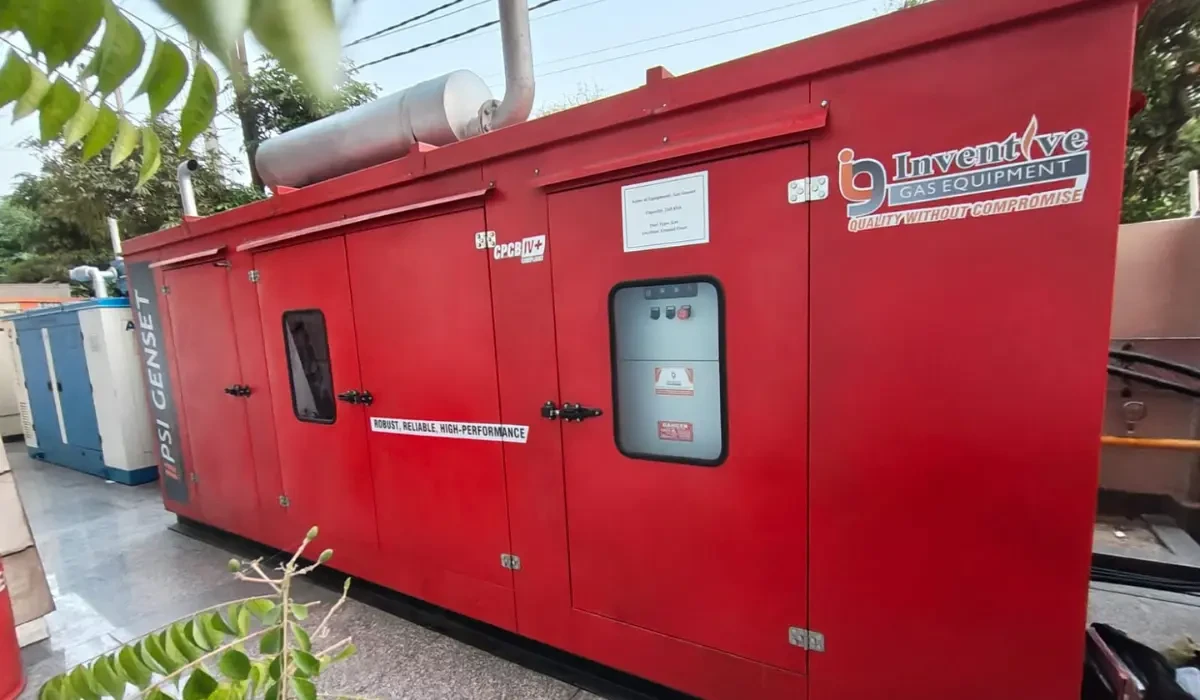
Gas Gensets
15 KVA to 500 KVA natural gas and biogas-powered generators engineered for continuous industrial and commercial use.
Learn More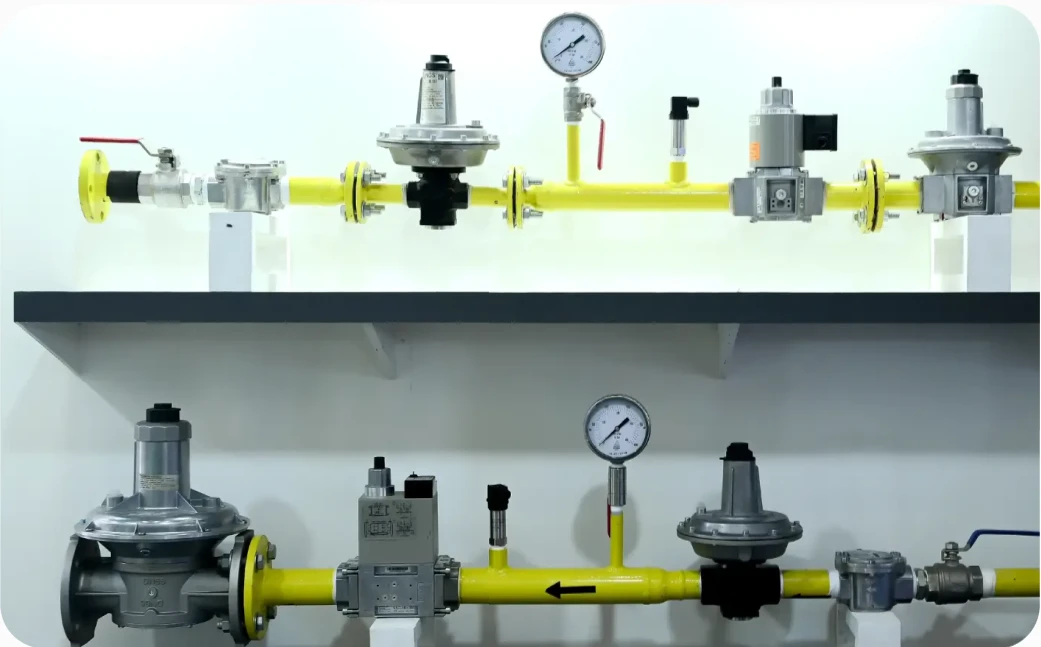
Dual-Fuel Kit
Convert existing diesel generators to run on gas + diesel simultaneously. Save up to 60% on fuel costs.
Learn MoreLatest News & Updates
Discover the latest trends, technological advancements, and expert insights in clean energy and industrial gas solutions.