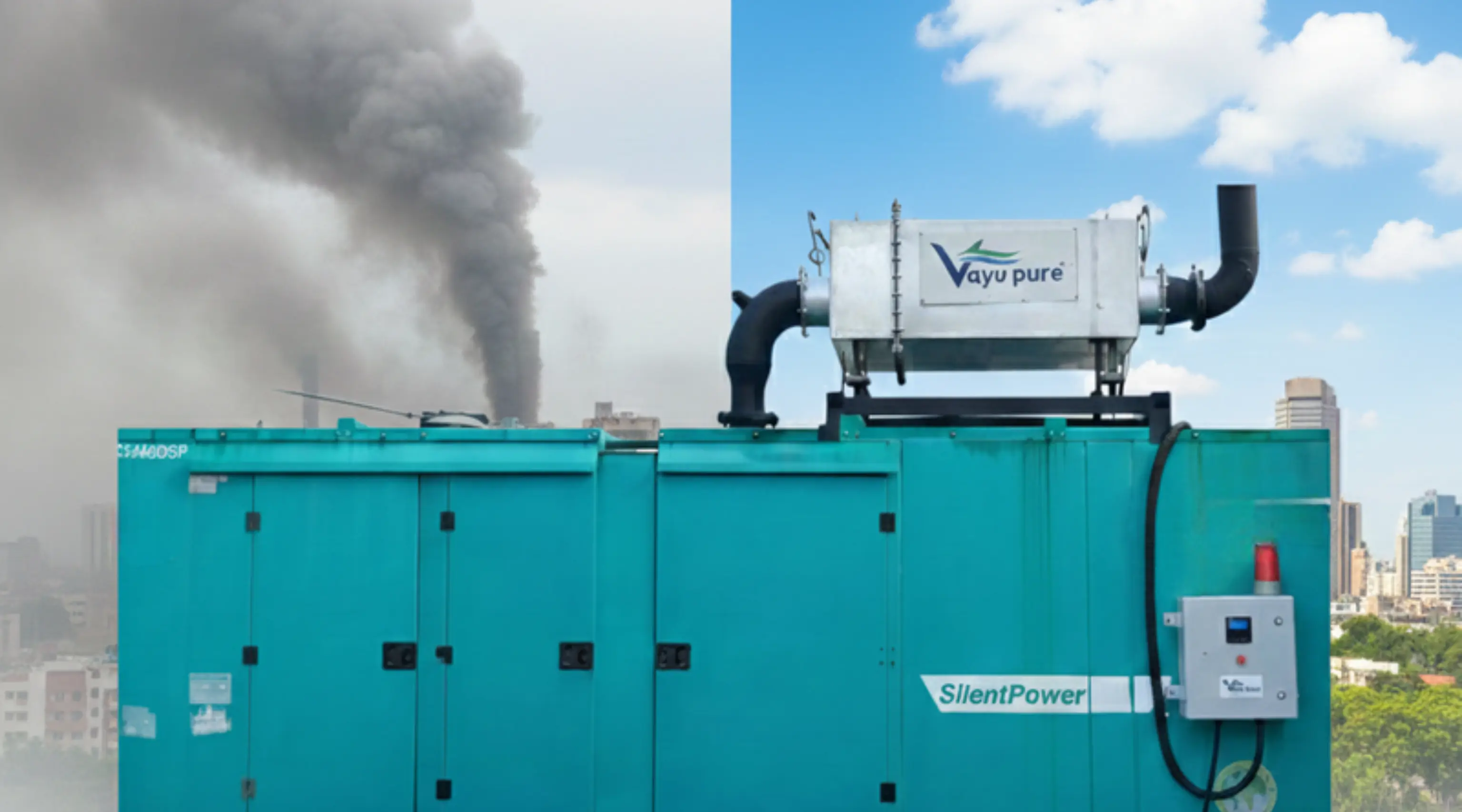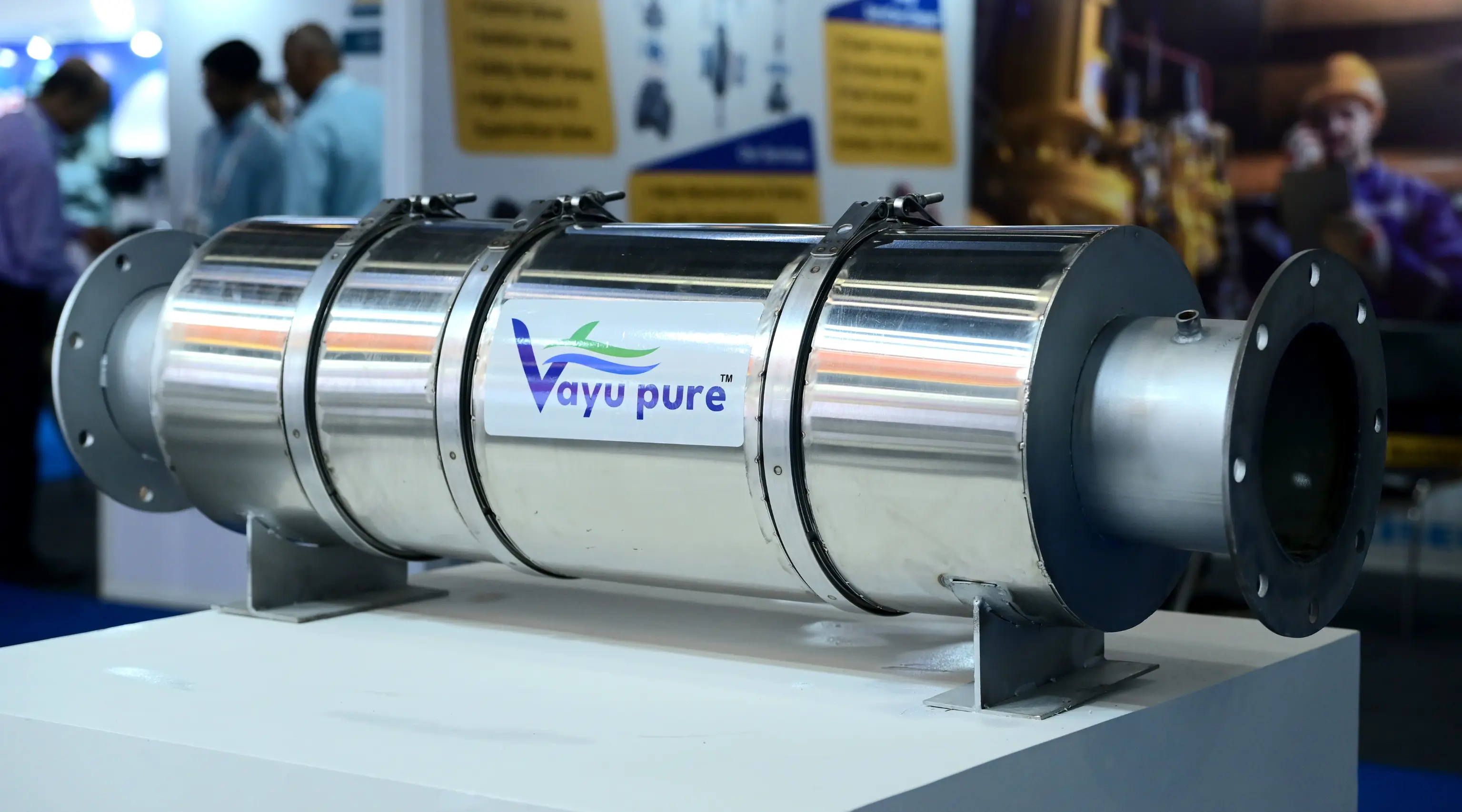
RECD Buying Guide 2026: How to Choose the Right Emission Control Device

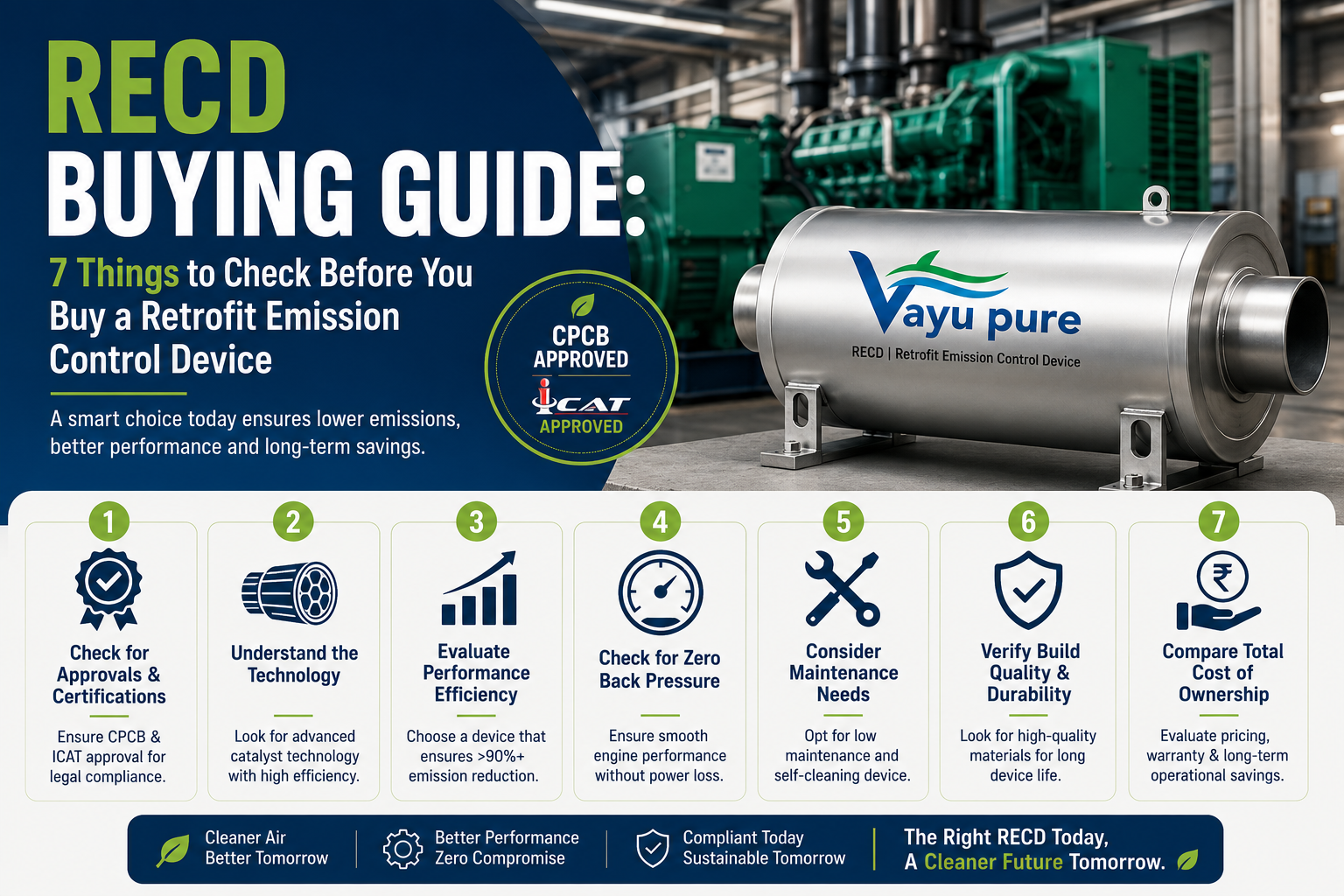
Planning to buy a Retrofit Emission Control Device for your DG set? Compare key features, costs, installation needs, and compliance factors before you invest.
RECD Buying Guide: 7 Things to Check Before You Buy a Retrofit Emission Control Device
Deciding to install a Retrofit Emission Control Device (RECD) on your diesel generator is the easy part - the real challenge is choosing the right one. With multiple manufacturers, technologies, and price points in the market, an uninformed decision can mean poor emission reduction, high maintenance costs, or even non-compliance despite the investment. This guide walks you through exactly what to evaluate before you buy.
Step 1: Confirm Whether Your DG Set Actually Needs an RECD
Before comparing products, check your compliance status. Ask yourself:
- Is your diesel generator older than the current emission-norm cutoff for new gensets in your state?
- Does your facility fall within a jurisdiction where pollution control authorities have mandated retrofit devices for existing DG sets?
- Have you received any compliance notice, audit flag, or renewal condition tied to emission control?
If the answer to any of these is yes, an RECD is likely your fastest and most economical route to compliance far cheaper than replacing an operational genset outright.
Step 2: Look Past the Marketing Numbers - Check for Real Test Data
Almost every RECD manufacturer advertises "70%+ particulate reduction," and while that's a reasonable industry benchmark, not all claims are independently verified. Before buying:
- Ask for test reports from CPCB-recognized or ARAI-accredited laboratories
- Check whether the reported efficiency covers PM only, or PM along with CO and HC
- Confirm the test cycle used (for example, ISO 8178 mode testing is a commonly referenced standard in this space)
A device with documented, lab-verified performance data is a safer long-term investment than one relying purely on brochure claims.
Step 3: Understand the Technology Behind the Device
RECDs generally use one of two core technologies:
- Electrostatic Precipitation (ESP) — Charges soot particles so they collect on internal plates, which are periodically scraped clean. This method typically skips water, chemical additives, or temperature-based regeneration - useful if you want lower ongoing consumable costs.
- Catalytic Conversion (Cat-Con) — Uses chemical oxidation, often paired with a self-cleaning trap, to reduce PM, HC, and CO. Some Cat-Con systems are engineered for very low or near-zero back pressure, which can be a meaningful factor for engine longevity.
Neither technology is universally "better" - the right choice depends on your genset's usage pattern, run-hours, fuel quality, and how much manual maintenance your team can realistically handle.
Step 4: Check Back Pressure and Engine Compatibility
This is one of the most overlooked factors. A poorly designed RECD can increase exhaust back pressure, which over time may affect engine efficiency, fuel consumption, and component wear. Before buying:
- Ask the manufacturer for back-pressure test data specific to your generator's kVA rating
- Confirm the device is sized correctly for your genset's exhaust flow, not just its power rating
- Check whether the design has been validated through computational simulation (CFD-based design is increasingly common among reputable manufacturers) for consistent airflow performance
Step 5: Evaluate Installation and Space Requirements
A genuinely well-designed RECD should install directly onto your existing exhaust line after the muffler - without requiring structural changes to your generator setup. When comparing options, ask:
- Does installation require a separate concrete foundation or extra floor space?
- Can the unit be installed without modifying the existing exhaust piping?
- Is remote or outdoor installation possible if your DG set is in a compact utility area?
- Is the housing weatherproof for outdoor or semi-exposed installation?
Compact, foundation-free designs generally mean lower installation cost and faster commissioning.
Step 6: Factor in Maintenance Frequency and Lifespan
Maintenance requirements vary meaningfully between brands and technologies. Ask suppliers directly about:
- Cleaning/servicing interval — Some devices need attention roughly every few hundred operating hours or every six months; others need more frequent servicing.
- Expected operational lifespan — Quality units are often built to last a decade or more under normal use.
- What happens to the collected particulate matter — Some manufacturers note that collected soot can be repurposed as raw material in industries like paints, dyes, or plastics, avoiding the need for hazardous disposal.
- Warranty coverage and availability of an Annual Maintenance Contract (AMC) — Bundles RECD and genset servicing together.
Lower lifetime maintenance cost can offset a slightly higher upfront price, so always calculate total cost of ownership, not just the purchase price.
Step 7: Prioritize a Manufacturer with Genset-Specific Expertise
A generic industrial equipment vendor is not the same as a specialist in diesel generator emission control. Look for manufacturers who:
- Specialize in DG set retrofit technology, dual-fuel systems, or gas conversion not just general fabrication
- Offer pre-installation site assessments to match the device to your specific genset model
- Provide installation, commissioning, and testing support, not just the hardware
- Have a service network that can support ongoing maintenance after the sale
Inventive Gas Equipment (IGE) designs RECD systems specifically for diesel generator retrofitting, backed by its broader experience in gas conversion and dual-fuel technology for industrial power systems. Their RECD is engineered for straightforward installation on existing exhaust lines, with a focus on maintaining low back pressure and dependable long-term particulate reduction. Full technical specifications are available on the RECD product page.
Quick RECD Buying Checklist
Before finalizing your purchase, make sure you have:
- Lab-verified PM/CO/HC reduction data
- Back-pressure specifications matched to your genset's kVA rating
- Confirmation of installation without exhaust modification
- Clear maintenance schedule and expected lifespan
- Warranty terms and AMC availability
- A manufacturer with genset/emission-control-specific expertise
Final Thoughts
Buying an RECD isn't just a compliance purchase it's an equipment decision that affects your generator's performance, your maintenance workload, and your facility's environmental footprint for years to come. Taking the time to compare test data, engineering design, and after-sales support will save you far more than it costs, both in avoided downtime and in genuine emission reduction.
Comparing RECD options for your diesel generator? Check Vayu Pure Retrofit Emission Control Device for DG Set (RECD).
Biogas Equipment
Explore our comprehensive range of high-performance biogas solutions, engineered for safe storage, efficient upgrading, and maximum operational reliability.
Double Membrane Gas Holder
High-performance double membrane gas holders engineered for safe, reliable and efficient biogas storage in industrial renewable energy systems
CO2 Removal System
Advanced VPSA and Membrane-based CO2 removal skids to upgrade biogas into high-purity biomethane for CBG applications.
Flaring System
Supply and commissioning of open/closed flares for safe excess gas handling with compliant flame safety controls.
H₂S Scrubber
Advanced H₂S scrubbing solutions with custom media selection, vessel sizing, and moisture removal for ultimate equipment protection.
Dehumidifier
Biogas dehumidification units to reduce moisture, protect downstream equipment, and improve system efficiency.
Core Solutions
End-to-end gas energy products engineered for reliability and fuel efficiency.
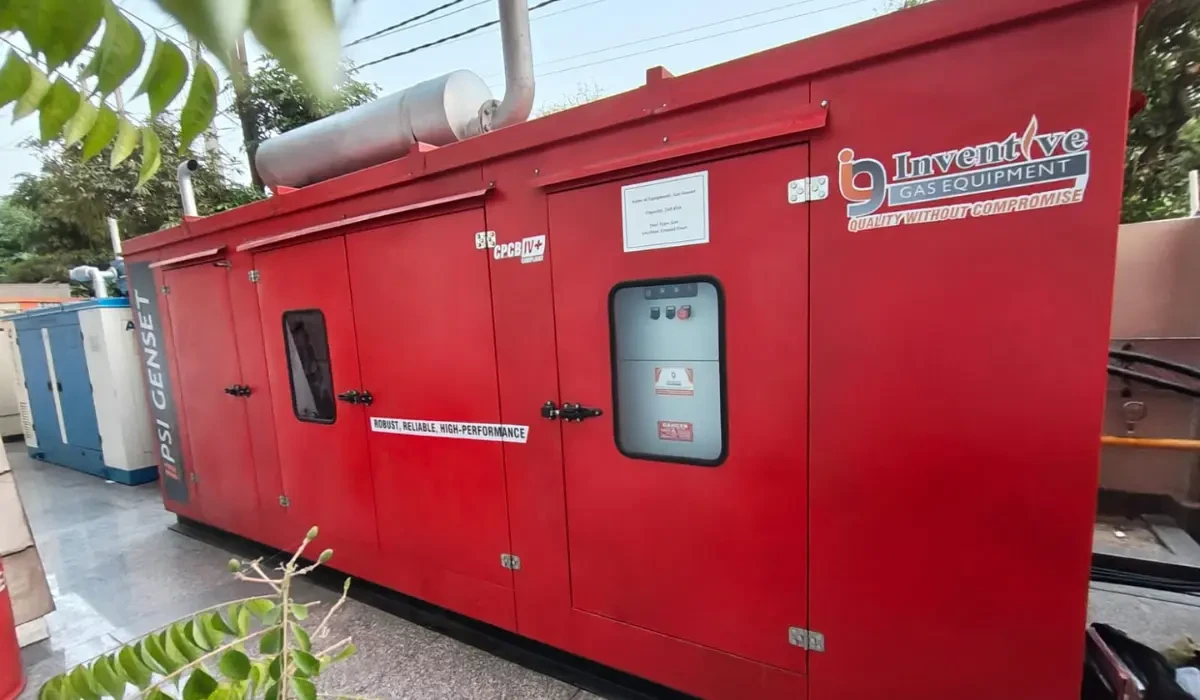
Gas Gensets
15 KVA to 500 KVA natural gas and biogas-powered generators engineered for continuous industrial and commercial use.
Learn More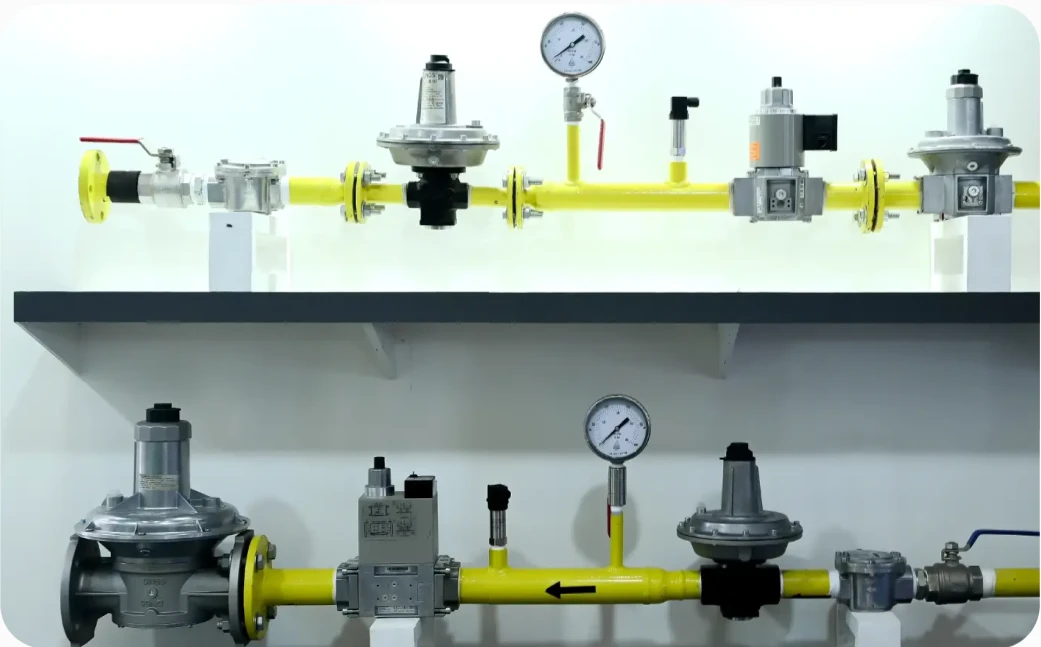
Dual-Fuel Kit
Convert existing diesel generators to run on gas + diesel simultaneously. Save up to 60% on fuel costs.
Learn MoreLatest News & Updates
Discover the latest trends, technological advancements, and expert insights in clean energy and industrial gas solutions.